Helping Kids Take Ownership
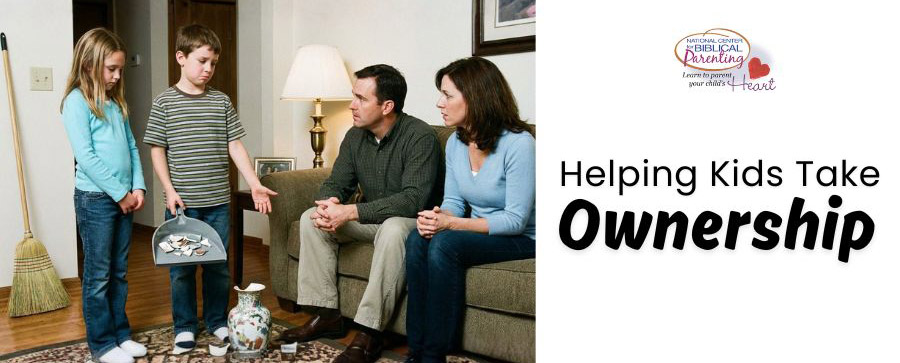

Some kids get stuck. Maybe it’s anger. Maybe it’s arguing. Maybe it’s disrespect or explosive reactions.
You correct the behavior, you offer wisdom, you give consequences, yet your child seems stuck. You want change, and you want it to come from the heart, not just because you told them what to do.
Here’s an idea to help kids take ownership for part of the solution. That does not mean sending a child away and saying, “Figure it out.” It means guiding them toward a practical, biblical plan they help create so that change begins to form inside their heart. It’s called the T-Chart Plan.
The T-Chart is a simple tool that gives children a strategy for success. It moves them from reacting in the moment to preparing in advance. It helps them practice wisdom, self-control, and responsibility in a way that is concrete and doable. When children participate in making their own plan, something shifts inside. They stop feeling like change is something being done to them and start feeling like it is something they can do with God’s help.
Why Children Need Their Own Plan
Parents often try to give children solutions. “Next time, just calm down.” “Count to ten.” “Walk away.” These suggestions may be good, but children often dismiss them because they don’t feel any ownership.
Let’s look at a young baseball pitcher I worked with who struggled with anger. Instead of giving him a prewritten plan, he was guided to create one for himself. That plan became his lifeline. He used it, refined it, and even shared it with teammates. He changed not because someone handed him a solution, but because he helped develop one.
The T-Chart Idea reflects a biblical truth from 1 Corinthians 10:13. All temptations, including anger, frustration, and impulsiveness, are common to every person. God always provides a way of escape so that we can stand up under pressure. The T-Chart helps children identify that “way of escape.” It teaches them to look ahead, think wisely, and practice self-control before they are overwhelmed.
What the T-Chart Looks Like
A T-Chart is a simple paper divided into two columns. At the top of the left column the child writes something like, “My Anger Plan” or “My Respect Plan” or “My Plan for Getting Along with My Sister.” This personalizes the process. You’re not writing the plan for the child. The child is writing the plan for themselves, which is the key to building ownership.
On the left side, the child writes five things they can do or say when they face their challenge. If they are young or overwhelmed, start with three. These do or say items reflect Psalm 19:14, which speaks of the “words of my mouth” and the “meditations of my heart.” Change happens at both levels. What children say out loud matters, and what they say in their hearts matters as well.
At first, when children are asked to write down solutions most say, “I don’t know.” That’s expected. This is where the second column becomes helpful. On the right side, labeled “Ideas,” parents can brainstorm with the child and even share their own ideas.
In fact, interviewing others can produce some interesting results. Children begin to realize that others experience similar issues but they have a plan that’s working for them. The question you ask of others is important. You can ask, “What helps you calm down?” or “What do you do when you feel angry so you don’t explode?” or “What do you say to yourself when you feel frustrated?”
Their ideas may include things like, “Take a deep breath,” “Walk away,” “Say to myself, ‘It’s not worth the anger,’” or “Remember I want to please the Lord.” But the key is this: only the child writes on their side of the chart. They choose which ideas they want to adopt. The parent and others supply ideas, but the child selects the strategies they believe will work. This gives the child immediate ownership and personal investment.
A Working Plan That Grows
Once the child completes their T-Chart, they decide where to keep it. One girl carried hers in her purse everywhere she went. Other children put it by their bed, in a backpack, or in a drawer. It becomes a working document. Over time they add items, cross off things that don’t work, and refine their approach.
The goal is not perfection. The goal is growth. When a child practices using their plan, they start experiencing success. They begin to feel capable, wise, and responsible. They discover that they can choose a different response even when emotions feel big. This is huge for a child’s heart.
And this tool works for more than anger. Parents use T-Charts for disrespect, sibling conflict, homework resistance, morning routines, and almost any area where a child needs a strategy. The process itself builds character, responsibility, and internal strength.
Why the T-Chart Matters for the Heart
Techniques in parenting are good, but techniques alone are not enough. They must fit into a larger strategy that reaches the heart. The T-Chart gives children a vision for who they can become. It trains their conscience, strengthens their inner self-talk, and gives them a plan to follow when life gets hard.
Parents often look for simple fixes, but the deeper question is how to help a child grow into the kind of person who can manage challenges with maturity. The T-Chart is one of the tools that can help make that happen.
Ready to Go Deeper?
If you want to learn more about how to use the T-Chart and many other practical, biblical strategies for building heart-based change in your children, the THRIVE! Course will guide you step-by-step. It is designed to give you a complete strategy, not just quick fixes. Discover the tools that can strengthen your family today.
Learn more by taking the course called THRIVE!



Leave a Reply
Want to join the discussion?Feel free to contribute!