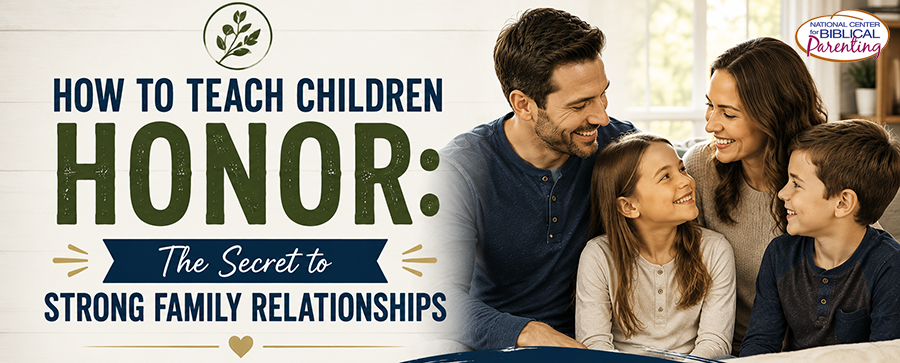
How to Teach Children Honor: The Secret to Strong Family Relationships

Most parents spend a lot of time teaching obedience. We remind children to complete chores, follow directions, and respect family rules. These are important lessons because obedience helps families function smoothly and provides the structure children need to grow. But many parents eventually discover that obedience alone isn’t enough to build strong relationships.
A child can obey while rolling his eyes. A teenager can comply while communicating resentment. A sibling can do what’s required while creating tension for everyone around them. The task gets completed, but the relationship suffers in the process.
That’s where honor comes in.
Honor is one of the most overlooked character qualities in modern parenting, yet it’s one of the most powerful. It transforms family interactions, reduces conflict, and prepares children for success far beyond the walls of their home. When children learn honor, they discover how to treat people as valuable, special, and worthy of respect.
In many ways, honor is the secret ingredient that makes family life work better.
Honor Is More Than Obedience
Many parents use the words obedience and honor interchangeably, but they aren’t the same thing.
Obedience focuses on getting the job done. Honor focuses on how the job is done and how people are treated in the process.
Imagine a parent asks a child to take out the trash. One child stomps across the room, sighs dramatically, mutters complaints under his breath, and eventually completes the task. That’s obedience.
Another child responds respectfully, completes the task willingly, and returns with a positive attitude. That’s honor.
Both children obeyed. Only one demonstrated honor.
Honor means treating people as special. It means doing more than what’s expected. It means bringing a positive attitude into relationships. While obedience is required in healthy families, honor is a gift that strengthens connection.
The Bible places tremendous value on honor. One of the Ten Commandments says: “Honor your father and your mother…” (Exodus 20:12). Notice that God didn’t simply command obedience. He commanded honor. Honor reaches deeper because it addresses the heart.
Honor Is the Oil That Reduces Friction
Every family experiences friction. People have different personalities, preferences, schedules, and expectations. Conflict naturally occurs whenever imperfect people live together.
Think about a machine with dozens of moving parts. Without oil, those parts create heat, noise, and wear. Friction increases. The machine still operates, but it doesn’t operate well.
Family life works the same way. Honor acts like oil.
When family members speak respectfully, show appreciation, cooperate willingly, and look for ways to help one another, relationships become smoother. Tension decreases. Communication improves. Problems become easier to solve.
Dishonor has the opposite effect. Complaining creates friction. Arguing creates friction. Sarcasm creates friction. Demanding attitudes create friction.
Parents often spend enormous energy trying to solve family conflicts without addressing the underlying issue of honor. Yet when honor increases, many conflicts naturally lose their intensity.
I like to say, “If you want your child to fly straight, teach them obedience. If you want them to fly high, teach them honor.”
Honor Builds Success Beyond the Home
One reason honor matters so much is that its benefits extend far beyond childhood. Teachers notice students who demonstrate honor. Coaches appreciate athletes who demonstrate honor. Employers value employees who demonstrate honor. Future spouses cherish partners who demonstrate honor.
Honor teaches children to think beyond themselves. Instead of asking, “What do I want?” they begin asking, “How can I help?” Instead of focusing only on personal preferences, they learn to consider the needs of others.
This shift is incredibly important because self-absorption creates problems in every area of life. A student who honors teachers becomes easier to teach. An athlete who honors teammates strengthens the team. An employee who honors supervisors gains trust and opportunity. A spouse who honors a partner builds a stronger marriage.
In many ways, honor becomes a competitive advantage because it is increasingly rare in today’s culture. Children who learn honor stand out. Not because they’re perfect, but because they consistently make relationships better.
Practical Ways to Teach Honor
Honor isn’t developed through lectures alone. Like most character qualities, it’s learned through practice. Parents can begin by helping children notice opportunities to honor others.
For example, holding a door for someone or saying thank you without being prompted. Listening without interrupting and speaking respectfully during disagreements or looking for ways to serve family members.
One simple question can become a powerful coaching tool: “What would honor look like right now?” That question helps children move beyond rules and begin thinking relationally.
Parents can also model honor in their own relationships. Children learn as much from what they observe as from what they’re taught. When they see parents speaking respectfully, expressing gratitude, and treating others with dignity, they gain a living example of honor in action.
What This Means for Parents
Many parenting struggles aren’t really obedience problems. They’re honor problems. The child may be completing tasks but damaging relationships. The child may be following directions while resisting in attitude. The child may be technically complying while creating unnecessary conflict.
When parents focus on honor, they address something deeper than behavior. They help children understand how their words, attitudes, and actions affect the people around them.
That’s a lesson that will serve them throughout life, because ultimately, life is built on relationships. And honor strengthens every relationship it touches.
Parenting Takeaways
- Honor is different from obedience.
- Obedience focuses on the task; honor focuses on the relationship.
- Honor means treating people as special and doing more than what’s expected.
- Honor acts like oil that reduces friction in family life.
- Children who learn honor are better prepared for school, sports, careers, and marriage.
- Ask, “What would honor look like right now?” to help children think relationally.
Frequently Asked Questions
What’s the difference between respect and honor?
Respect often refers to recognizing someone’s position or authority. Honor goes further by treating people as valuable and special through attitudes, words, and actions.
Can a child obey without honoring?
Yes. A child can comply externally while maintaining a poor attitude internally. Honor addresses both behavior and heart attitude.
How do I teach honor to younger children?
Focus on simple actions such as saying thank you, using kind words, helping others, and showing respect during everyday interactions.
Why is honor important outside the family?
Honor strengthens relationships everywhere. It helps children succeed with teachers, coaches, employers, friends, and future spouses.
Conclusion
Obedience helps families function, but honor helps families flourish. When children learn to treat people as special, bring positive attitudes into relationships, and look for ways to serve others, they reduce friction and increase connection. Honor becomes the oil that keeps family life running smoothly. More importantly, it prepares children for a lifetime of healthy relationships and meaningful influence.
Want to Go Deeper?
To learn more about developing internal motivation in children, consider the parent-child interactive program Hero Training Camp at Home. This unique program includes a college-level parenting course with eight sessions focused on helping children develop responsibility, integrity, compassion, and other character qualities from the inside out.
In addition to the parent training, the program includes activities, Bible stories, craft ideas, and conversation starters designed for children ages 3–12. While the children’s activities focus on younger kids, the parenting course is valuable for parents of children of all ages. If you’re looking for practical ways to build character, strengthen the conscience, and help your child develop internal motivation, Hero Training Camp at Home provides a powerful next step. Learn more at https://app.biblicalparenting.org/heroesathome



Leave a Reply
Want to join the discussion?Feel free to contribute!