
Why Strategy Beats Reactivity in Parenting
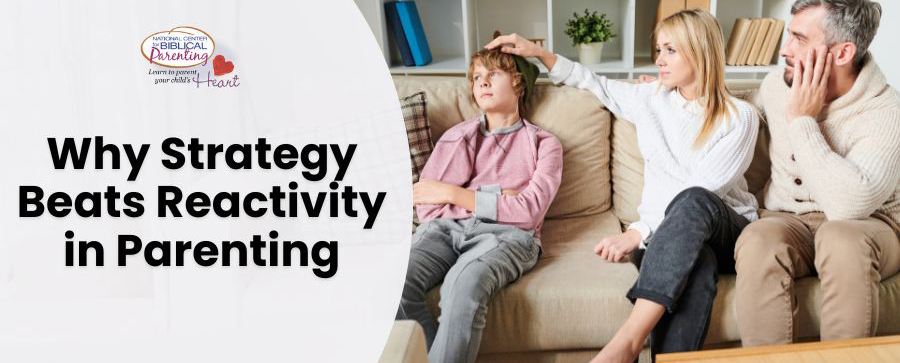

Parenting a challenging child can feel like being on a rollercoaster you didn’t sign up for. One moment things are calm, and the next you’re in a full-blown battle over homework, screen time, or chores. It’s exhausting.
What many parents don’t realize is that much of the tension comes not from the child’s behavior itself, but from a pattern of reactive parenting. The good news? There’s a better way—and it’s called strategy.
Reactivity vs. Intentionality
Most parents don’t start the day intending to be reactive. They wake up with good intentions, maybe even a prayer or a fresh cup of coffee. But once the chaos hits—maybe a child refuses to get dressed, talks back, or melts down—parents slip into response mode. The goal becomes to stop the problem immediately. That often means raising voices, issuing empty threats, or giving in just to keep the peace.
But reactivity doesn’t build character in the child. It doesn’t train the heart. It just puts out fires. Unfortunately, fires that get put out this way tend to re-ignite.
Strategic parenting, on the other hand, takes a step back. It asks bigger questions: What’s going on in my child’s heart? What character quality needs to be developed? What tools can I use to train, not just correct? Strategy anticipates patterns and builds a thoughtful, biblical plan to address them.
Proverbs 21:5 (NIV) says, “The plans of the diligent lead to profit as surely as haste leads to poverty.” Parenting is no different. Hasty parenting—reactivity—leads to emotional poverty. Strategic parenting—planning with insight—leads to long-term growth and relational richness.
Patterns Are Opportunities
One of the first steps toward strategic parenting is learning to identify patterns. If your child melts down every time it’s time to turn off electronics, or consistently stalls when asked to do chores, those patterns are more than just annoyances—they are doorways into the heart.
Instead of simply reacting in the moment, ask yourself: “What’s the character issue here?” Maybe it’s a lack of flexibility, or a resistance to responsibility. Maybe it’s selfishness or impulsiveness. Once you name the issue, you can develop a plan to address it—just like a doctor doesn’t treat symptoms, but identifies the root problem and prescribes a treatment.
This is where strategy shines. Let’s say your child tends to argue when asked to help out. Instead of repeating yourself or escalating, you implement a plan: you sit down with your child, talk through expectations, create a visual chart or checklist, and role-play right responses. You give reminders before the conflict, not just during. You train, instead of merely correct.
The result? You gain ground over time. The pattern becomes less intense. Your child begins to internalize the character you’re trying to instill. Strategy helps you take control—not of your child, but of the process.
Parenting with the End in Mind
Strategic parenting also means parenting with the end in mind. It’s not about winning the moment—it’s about shaping the future. You’re not raising a 10-year-old; you’re raising a future adult. Every moment of training is a brick in the foundation of who your child is becoming.
Think about how God works with us. He doesn’t just zap us when we make a mistake. He patiently teaches us through Scripture, consequences, relationships, and His Spirit. He disciplines, yes—but with purpose, not with panic. Hebrews 12:11 (NIV) says, “No discipline seems pleasant at the time, but painful. Later on, however, it produces a harvest of righteousness and peace for those who have been trained by it.” That’s the goal—not just stopping the behavior, but producing a harvest of righteousness.
When you become a strategic parent, you stop reacting to each misstep and start investing in the person your child is becoming. You create routines, action plans, and heart-based tools that move your child forward. You stop trying to control behavior and start shaping character.
What Strategy Looks Like in Real Life
Let’s say you have a 13-year-old daughter who explodes in anger every time she’s told no. You’ve tried ignoring her, sending her to her room, even taking privileges away. Nothing changes. Strategy says: it’s time for a new approach.
First, you recognize the pattern. This isn’t about the particular request—it’s about emotional regulation and entitlement. So, you create a strategy: you build in practice sessions where she hears no in a controlled setting and learns how to respond. You role-play situations. You memorize and discuss Bible verses on anger and self-control. You praise every moment of progress, even small ones. You invite her into the process—asking her what helps her stay calm, and giving her tools like deep breathing, walking away, or journaling her emotions.
This takes effort—but it builds maturity. It grows her heart. And it changes the tone of your home.
Of course, strategy doesn’t mean perfection. You’ll still have hard days. But when you’re working a plan, you have direction. You feel empowered instead of helpless. You become less like a firefighter and more like a builder—constructing a strong, biblical foundation in your child’s life.
A Better Way Forward
If parenting your challenging child has left you feeling discouraged or depleted, maybe it’s time to stop putting out fires and start building a strategy. You don’t have to figure it out alone. God is with you. His Word is full of wisdom. And the heart-based approach offers practical tools to help you implement that wisdom in your family.
You don’t need to yell louder. You need to think longer. Pray harder. Plan better. That’s what strategic parenting is all about.
If you’re ready to move from frustration to confidence in your parenting, check out our course:
How a Heart-Based Approach Changes Everything
This course is packed with practical solutions, biblical wisdom, and encouragement to help you build a strategy that transforms your child’s heart—and your home.









Leave a Reply
Want to join the discussion?Feel free to contribute!