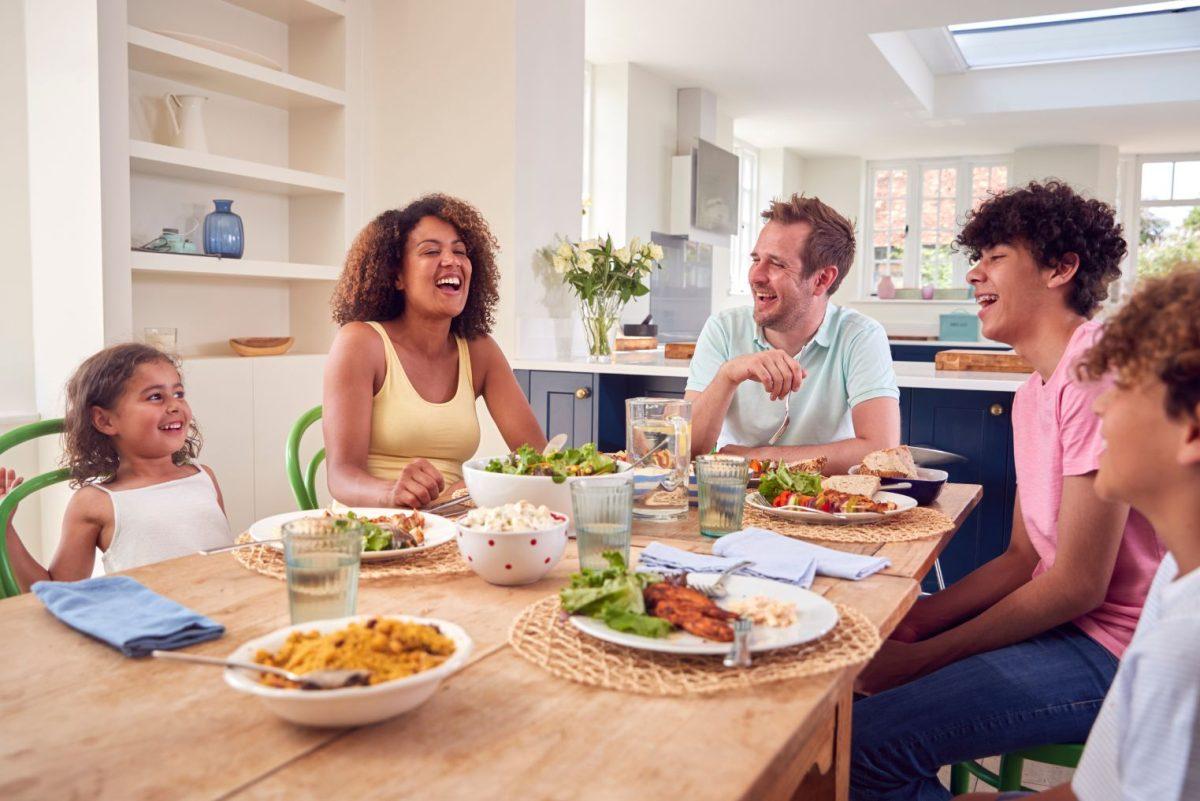
Q: My kids fight at the dinner table every single night. How do I make it stop?
A: You’re not alone – sibling conflict at mealtimes is one of the most common things parents deal with. Start with the seating arrangement. Strategically separating kids who tend to clash by putting a parent between them makes a real difference. Beyond that, give everyone a role at the table – filling water glasses, reading the scripture, sharing first – so there’s something constructive to focus on. And hold a clear, calm standard: mealtimes are for connection, not conflict. When things escalate, address it briefly and redirect. Over time the routine builds its own culture.
Q: My child refuses to eat anything on their plate and makes every meal a battle. What do I do?
A: Separate your job from your child’s job. Your job is to provide healthy food. Your child’s job is to decide how much to eat. When you turn every meal into a negotiation over how many bites they take, mealtimes become about control rather than connection – and nobody wins that battle. Offer what the family is eating, keep the environment calm and relaxed, and resist the urge to make a separate meal every night. Over time children’s palates tend to expand when there isn’t pressure attached to every bite.
Q: We’re so busy that we almost never eat together as a family. Is that a big deal?
A: Research consistently shows that families who eat together regularly have closer relationships, better communication, and kids who do better in almost every measurable area of life. That doesn’t mean you have to do it every night. But it does mean it’s worth protecting. Start with one consistent night a week if that’s all you can manage. Put it on the calendar like any other commitment. And keep it simple – the goal is the time together, not the meal. A pizza night around the table counts just as much as a home-cooked dinner.
Q: How do I keep the conversation going when my kids just want to eat and leave?
A: Have a plan before you sit down. Questions like “What was the best part of your day?” get one-word answers. Questions like “Tell me something that surprised you today” or “What’s one thing you’re looking forward to this week?” require a real response. Go around the table so everyone participates. And model it yourself – share something from your own day first. When kids see that the conversation is interesting and that their parents are genuinely engaged, they tend to engage too.
Q: My teenager won’t put their phone down at dinner. How do I handle that?
A: Make it a family rule, not a teenager rule. When everyone at the table has their phone away – including the adults – it’s a shared commitment rather than a punishment. Have a basket or a designated spot where all the phones go before dinner. Hold to it consistently and warmly. If your teenager pushes back, acknowledge it without backing down: “I know it’s hard. Phones away is a family rule because this time together matters.” Over time that time around the table without screens becomes one of the things teenagers remember most fondly about growing up.
Q: How do I use mealtimes to build my family’s faith without it feeling forced or like a lecture?
A: Keep it short, natural, and conversational. Read one verse – not a whole chapter. Share one thing God has done in your life recently. Ask your kids one question about what they’re learning spiritually. You don’t need a curriculum or a formal devotional to build faith at the table. You just need to make God part of the normal conversation. When faith is woven into the everyday rhythms of family life, it tends to stick in ways that formal religious instruction alone never quite manages.
Q: Is it okay to address bad behavior at the dinner table or should I wait?
A: If behavior is disrupting the meal or the family, address it briefly and calmly in the moment. A simple “That’s not how we talk at this table” is usually enough to redirect. What you want to avoid is turning the entire meal into a discipline session – that defeats the whole purpose. Save longer conversations about behavior for after the meal when things are calm. The goal of mealtime is connection. Keep it as the priority, address what needs addressing, and then get back to the good stuff.