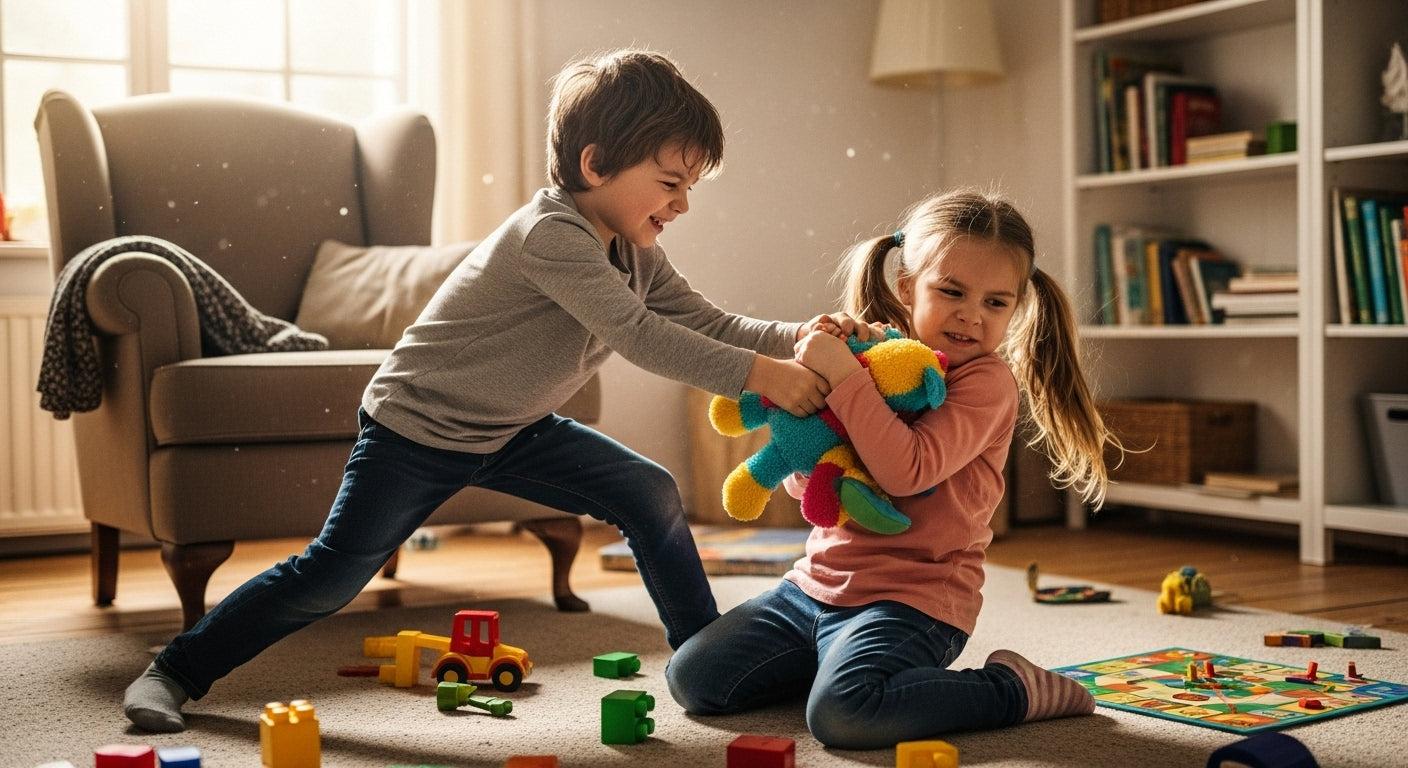
Q: My kids fight constantly. Is this just normal or is something wrong?
A: It’s more common than you think – and it doesn’t mean something is fundamentally wrong with your children or your family. Sibling conflict flows directly from the heart. James 4:1 tells us that fights come from the desires that battle within us. That’s true for adults too. What matters most is what you do with it. The families who handle sibling conflict best aren’t the ones with kids who never fight. They’re the ones who’ve learned to use the conflict as a training ground. Every fight is a doorway into a deeper conversation about the heart. The question is whether you’re walking through it.
Q: My kids fight and I can never figure out who started it. How do I handle that?
A: Stop trying to figure out who started it. That question almost always makes things worse. It invites children to justify themselves, blame each other, and defend their actions. Instead focus on each child’s response regardless of who started it. Even if one child did something wrong first, the other child still had a choice about how to respond. Work with each child separately and ask “How could you have handled that better?” That question teaches the right lesson no matter what happened first.
Q: Should I let my kids work it out themselves or step in every time?
A: The goal is to gradually move from stepping in to coach to stepping back as your children develop the skills. With young children especially, letting them fight it out without any guidance doesn’t teach conflict resolution – it just means the louder or stronger child usually wins. But as you coach them consistently over time – helping them ask the right questions, practice better responses, and develop the language for working through conflict – you can gradually step back. The goal isn’t just a quieter house. It’s children who know how to be peacemakers.
Q: My kids seem to enjoy annoying each other on purpose. What’s going on?
A: What looks like deliberate provocation is usually a child who hasn’t yet developed the empathy to understand how their behavior lands on others – or a child looking for a reaction because reactions feel like connection. Either way it’s a teaching opportunity. Proverbs 12:16 says a prudent person overlooks an insult. Help your child practice that. And look for ways to build genuine positive connection between the siblings through shared activities and time together that’s actually enjoyable. Siblings who genuinely enjoy each other are far less likely to spend their energy trying to irritate each other.
Q: My older child always picks on the younger one. How do I handle that?
A: This is one of the most common sibling dynamics. The older child usually has more power – more capability, more vocabulary, more strategy. And they need to be taught what to do with it. The concept of servanthood is particularly powerful here. Help your older child understand that looking out for a younger sibling, being patient with their immaturity, and using their greater ability to help rather than dominate – that’s a mark of genuine character. Jesus said the one who wants to be great must learn to be the servant of all. That truth applies at every age.
Q: My teenagers are constantly at each other’s throats. Is it too late?
A: It’s not too late. But the approach needs to shift. With teenagers you can have more direct conversations about relationship skills – about what kind of relationship they want to have with their sibling as adults, about how they’re treating someone who will potentially be one of their closest family members for the rest of their lives. Teenagers often respond to that longer-term vision in a way younger children can’t. Hold the standard clearly. Address disrespect firmly. And keep pointing them toward the relationship they could have, not just managing the conflict they currently have.
Q: I lose my temper every time my kids fight. How do I stay calm when it’s constant?
A: This is one of the most honest things parents admit – and it makes complete sense. When you’re depleted and the fighting is relentless, your own emotional reserves are low and everything feels harder. A few things help. First, remind yourself that this is training, not just an interruption. When you see the conflict as an opportunity rather than an attack on your peace, your response tends to shift. Second, address it early before the intensity builds – the earlier you step in, the calmer everyone is including you. And third, give yourself grace. You can only give what you have. A depleted parent doesn’t have much patience left. That’s not a character flaw. It’s the reality of a hard season. The same grace you’re trying to extend to your kids – extend it to yourself too.