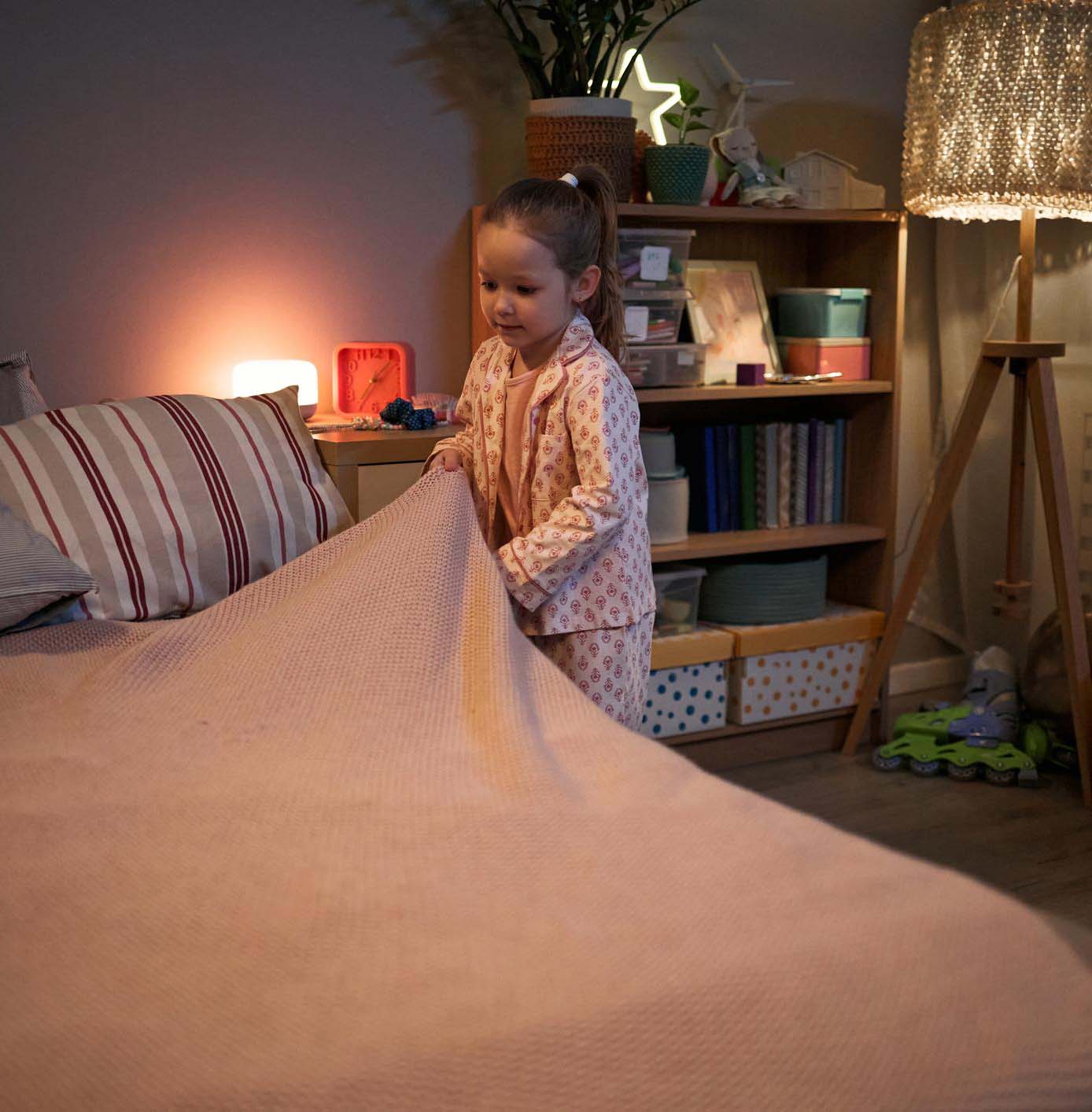
Q: My child stalls every single night at bedtime. I’m exhausted by the time they’re finally asleep. What do I do?
A: You’re not alone in this – bedtime stalling is one of the most common things parents deal with. The key is to remove the opportunities to stall before they arise. Take care of all the bathroom trips, water requests, and pajama needs about 30 minutes before actual bedtime so those things are already done. Build a short, predictable routine – book, prayer, lights out – and stick to it every night. When the routine is clear and consistent, kids have less to negotiate about. The first week or two of holding the line firmly will be the hardest. After that, the pattern starts to settle.
Q: My child gets out of bed repeatedly after I put them down. How do I handle that?
A: Calmly return them to bed every time. No long conversations, no lectures, no frustration – just a brief, warm “Back to bed” and walk them back. It might happen five times the first night. It might happen fifteen. But each time you return them calmly and consistently, you’re teaching them that getting out of bed doesn’t produce anything interesting. Over time – usually within a week or two of consistent follow-through – most kids stop. The calm consistency is what does the work, not the intensity of your response.
Q: Should I let my child cry at bedtime or go in and comfort them?
A: This really depends on your child’s age and what’s driving the crying. A young child who’s genuinely distressed benefits from brief reassurance – checking in, offering comfort, and then calmly leaving again. An older child who cries at bedtime as a strategy to get you to stay longer is a different situation. In that case, holding the boundary while staying warm and calm is more helpful than repeated comforting. The goal is to help your child learn to settle themselves – not to let them cry alone indefinitely, but also not to train them to cry longer and louder to get more time with you.
Q: My child says they’re scared at night. How do I handle that without dismissing their fears?
A: Take the fear seriously – because to your child, it’s real. Acknowledge it first: “I hear you. It feels scary in the dark and that makes sense.” Then help your child build resources for those moments – a prayer they can say, a verse they can remember, a nightlight, a stuffed animal that keeps them company. Prayer at bedtime is one of the most powerful tools for bedtime fears. Asking God to give your child a good night’s sleep and good dreams – and doing it consistently, night after night – builds a genuine sense of security that’s rooted in something far deeper than a nightlight ever could be.
Q: My child keeps asking for one more drink of water, one more hug, one more story. How do I draw the line?
A: These requests are usually a mix of two things – genuine need for connection and a learned strategy for extending the evening. Meet the connection need earlier in the routine. Make the bedtime itself warm, unhurried, and meaningful – a book, a prayer, a few minutes of genuine presence. Then when the routine is done, it’s done. Hold that line kindly and consistently. “We already had our special time together. It’s sleep time now.” One more request gets a calm redirect, not a new round of negotiation.
Q: My teenager won’t go to bed at a reasonable hour and is exhausted every morning. What do I do?
A: Teenagers genuinely have a different sleep rhythm than younger children – their bodies naturally want to stay up later. But that doesn’t mean there are no limits. Hold a clear expectation around devices and screens in the evening since they’re one of the biggest culprits in keeping teens wired late at night. Have a conversation about what an appropriate bedtime looks like and why – not as a lecture but as a genuine discussion about health and wellbeing. And let natural consequences do some of the teaching. A teenager who’s genuinely exhausted every day is more open to adjusting their schedule than one who feels fine.
Q: How do I make bedtime feel special rather than just another battle to get through?
A: Start by shifting your own mindset about what bedtime is for. It’s not just about getting your child to sleep. It’s one of the few moments in the day where everything slows down and you have your child’s full attention. Pray with them. Ask them one genuine question about their day. Speak something good over them before they sleep. Even a simple “I love you. I’m proud of you. Sleep well” lands differently at the end of a quiet day than in the middle of a busy one. When you invest in making the routine meaningful, kids start to look forward to it rather than resist it. And so do you.