
When Anger Erupts: Teaching Kids That Emotions Are Signals, Not Solutions
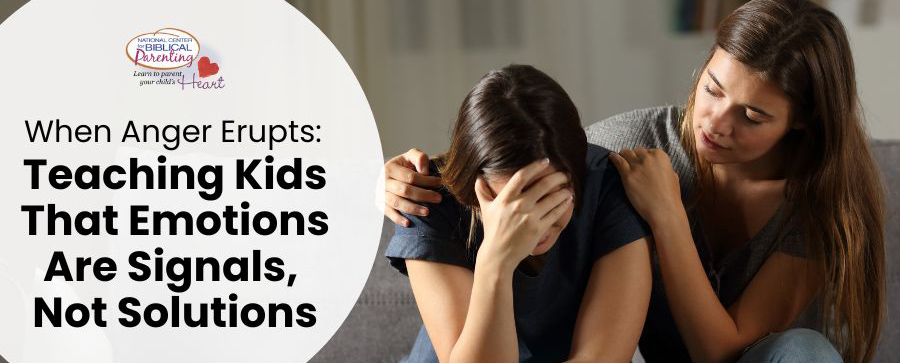

If you’ve ever watched two of your children go from calm to chaos in three seconds, you’re not alone. One minute someone’s playing quietly on the couch, and the next, you’re breaking up a wrestling match over who changed the TV channel.
The intensity of sibling conflict often catches parents off guard, but beneath the outbursts and slammed doors lies a valuable training opportunity. Our kids don’t just need to “calm down”—they need to learn what anger is and how to respond to it. One of the most powerful parenting insights you can offer your children is this: anger is a signal, not a solution.
Many children believe that when they feel angry, their only options are to yell, hit, or storm away. They see anger as a force that must be released. But what if we could teach them to see it as a warning light on the dashboard of their heart? A blinking signal that says, “Something is wrong,” without giving them permission to hurt others in the process?
This small shift in thinking can completely change how children experience and manage conflict—not just with siblings, but throughout their lives. Let’s take a deeper look at this idea of anger as a signal, how it fits into a biblical view of the heart, and what parents can do to turn emotional chaos into character development.
Understanding the Source: Where Anger Comes From
James 4:1 asks a revealing question: “What causes fights and quarrels among you? Don’t they come from your desires that battle within you?” Scripture makes it clear that the roots of conflict live inside the heart. Our desires—some good, some selfish—grow and intensify. When they are blocked or unmet, they often give birth to anger.
Children may not have the vocabulary to explain this dynamic, but they feel it deeply. The toy they were building with gets knocked over. A sibling grabs the seat they wanted. A parent says no to the popsicle request. The desire becomes a demand, and the child erupts.
We’ve identified five common causes of anger in kids: blocked goals, unmet expectations, perceived unfairness, violated rights, and pain. Each one stirs the heart and creates an emotional reaction. But the solution to that reaction isn’t found in yelling louder or hitting harder.
The solution lies in helping kids interpret what’s happening inside and equipping them with better tools for responding. Just like a smoke alarm doesn’t put out fires, anger doesn’t fix problems. But it does alert us that something needs attention. The question is: will we treat anger like a hammer, or a flashing light?
Teaching Emotional Awareness and Control
The first step in helping a child deal with anger is to recognize the emotion before it takes over. Many kids move from frustration to explosion in an instant. Parents can slow that process by helping children identify their own warning signs: clenched fists, loud voices, eye-rolling, a sarcastic tone, or pacing. Each child is different, and part of emotional training is self-awareness.
The next step is to require a break, a moment of separation from the situation that allows the emotion to settle. This isn’t a punishment. It’s a reset. Just like adults might take a deep breath or step outside, children need a tool to regulate emotion before attempting to resolve the issue. We call it “taking a break,” and it is one of the most effective parenting tools you can use—not only to de-escalate conflict, but also to train children in self-control.
Once calm has been restored, it’s time to debrief. This is where the learning happens. Parents can ask reflective questions: “What did you do wrong?” “What can you do differently next time?” This isn’t about shame—it’s about equipping the child with a plan for growth.
Children often replay conflicts in their heads later. If you insert a vision of success in that moment, you shape what they will do next time. And with enough practice, next time will look very different from the last.
Replacing Anger with Constructive Strategies
As children begin to recognize their anger as a signal, they’ll need something to replace their old habits. That means giving them practical, age-appropriate tools for handling big emotions. One boy I worked with simply chose to leave the room every time his younger brother annoyed him. That was a great start—but later, he was challenged to stay in the room and use words instead. Progress builds on itself.
Children don’t just need “don’t do that.” They need, “Try this instead.” Learning to express anger through words like, “That bothered me,” or, “Can we take turns?” is a skill that takes time. But every episode of conflict becomes an opportunity to rehearse it. Eventually, kids will learn to pause, reflect, and respond rather than react—and that’s a victory far greater than simply “not yelling.”
In fact, kids who learn to respond wisely to anger grow up to be adults who can lead, cooperate, and form healthy relationships. Teaching them how to use words, solve problems, and calm themselves down is giving them tools they will use for a lifetime. It’s not just behavior management. It’s heart training.
Your home doesn’t have to be ruled by emotional outbursts. With vision, intentionality, and biblical insight, you can lead your children to become calm in the storm, problem-solvers in conflict, and peacemakers in relationships. Want to learn more about how to turn emotional outbursts into growth opportunities? This idea comes from the video course How a Heart-Based Approach Changes Everything. You can access the full course at app.biblicalparenting.org/it-changes-everything. Discover a practical and biblical path to transformation for your family today.




Leave a Reply
Want to join the discussion?Feel free to contribute!