
Preparing Kids for Life’s Giants – How Small Challenges Build Strength for Bigger Ones
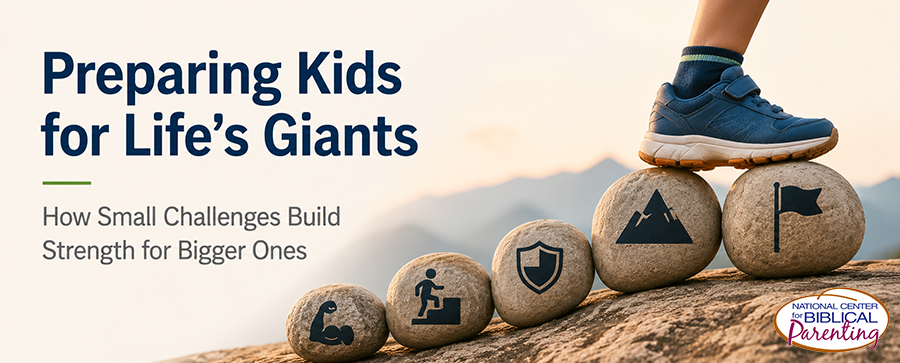

Most parents want their children to be strong enough to handle the big challenges they’ll face in life. We hope they’ll have the courage to stand up for what’s right, the wisdom to make good decisions, and the resilience to navigate difficulties without falling apart.
What many parents don’t realize is that strength for life’s biggest challenges is usually developed long before those challenges ever arrive. Character isn’t built in the moment of crisis. It’s built through the ordinary experiences that come before it.
The teenager who stands firm against peer pressure didn’t suddenly become courageous that day. The young adult who perseveres through a difficult season didn’t suddenly develop resilience overnight. The person who demonstrates integrity when it matters most is usually drawing on habits and convictions developed over many years.
That’s why the small challenges of childhood matter so much.
David’s Giant Wasn’t His First Battle
When most people think about David, they think about his dramatic confrontation with Goliath. The image of a young shepherd defeating a giant has inspired generations of people to trust God and face their fears.
But Goliath wasn’t David’s first battle.
Long before he walked into the Valley of Elah, David had been learning responsibility while tending sheep. He had faced danger when predators threatened the flock. He had learned to stay faithful in ordinary tasks when no one was watching. He had developed courage, perseverance, and trust through experiences that seemed much smaller at the time.
When David volunteered to face Goliath, he didn’t point to his natural abilities. Instead, he remembered the ways God had already helped him through previous challenges. Those earlier experiences gave him confidence that God would continue to work in his life.
The giant didn’t create David’s character. The giant revealed the character that had already been developing.
The Training Ground of Everyday Life
Children often think that the important moments of life are still somewhere in the future. They imagine that one day they’ll face something significant, and that’s when they’ll need courage, responsibility, wisdom, or self-control.
The reality is that those qualities are being developed right now.
A child who learns to finish a difficult assignment is practicing perseverance.
A child who tells the truth after making a mistake is practicing integrity.
A child who responds respectfully when frustrated is practicing self-control.
A child who keeps working when something feels difficult is building resilience.
These moments may not seem dramatic, but they are preparing children for larger responsibilities and greater opportunities later in life.
Everyday life is a training ground.
Small Challenges Create Big Growth
One reason parents sometimes overlook ordinary struggles is because they seem insignificant. Compared to the challenges adults face, a forgotten chore, a difficult friendship, or a frustrating homework assignment can appear relatively small.
But growth doesn’t happen all at once.
Athletes don’t prepare for a championship by training only on the day of the competition. Musicians don’t perform a concert without years of practice. Builders don’t construct a house by placing all the materials at once.
Growth happens through repeated experiences over time.
Children develop strength by facing manageable challenges and learning how to respond well. Each success creates confidence. Each failure creates an opportunity to learn. Each challenge adds another layer of growth.
The small things are often preparing children for the big things.
Why Rescuing Can Sometimes Hurt Growth
Parents naturally want to help their children. Watching a child struggle can be uncomfortable, especially when we know we could step in and make the problem disappear.
Sometimes intervention is necessary. Children need guidance, support, and protection.
But there are also times when rescuing a child too quickly prevents important growth from taking place.
If parents solve every problem, remove every obstacle, and eliminate every difficulty, children may miss opportunities to develop confidence in their own ability to face challenges.
Strength grows when children discover that they can handle difficult things.
The goal isn’t to abandon children to their struggles. The goal is to walk beside them while allowing them to do the growing.
Teaching Children to View Challenges Differently
One of the most valuable lessons parents can teach is that challenges are not necessarily signs of failure.
Many children interpret difficulty as evidence that something is wrong. If a task feels hard, they assume they aren’t capable. If they make a mistake, they conclude they aren’t good enough.
Parents can help children develop a healthier perspective.
Instead of asking, “How do I get rid of this problem?” children can learn to ask, “What can I learn from this challenge?”
Instead of seeing obstacles as enemies, they can begin seeing them as opportunities for growth.
This shift in thinking changes everything.
Children become less fearful of mistakes. They become more willing to persevere. They begin understanding that growth often feels uncomfortable because growth requires change.
The Bigger Mission
Every child is being prepared for a future that parents cannot fully predict.
We don’t know all the opportunities they’ll have. We don’t know all the challenges they’ll face. We don’t know all the responsibilities God may place before them.
What we do know is that character will matter.
Responsibility will matter.
Perseverance will matter.
Integrity will matter.
Compassion will matter.
The everyday challenges children face today are helping prepare them for the opportunities and responsibilities of tomorrow.
That’s why parents should never underestimate the importance of small victories.
Parenting Takeaways
- David’s victory over Goliath was built on many smaller victories beforehand.
- Everyday challenges are often preparing children for future responsibilities.
- Character develops gradually through repeated experiences.
- Small challenges create opportunities for significant growth.
- Parents should support children through struggles without removing every difficulty.
- Strength grows when children learn they can handle hard things.
Frequently Asked Questions
How do I know if a challenge is helping my child grow?
A helpful challenge stretches a child without overwhelming them. Growth often occurs when children experience difficulty but still have the support and resources needed to work through it.
Should I let my child fail?
Sometimes small failures provide valuable learning opportunities. Parents can help children process mistakes, learn from them, and develop resilience without rescuing them from every consequence.
What if my child becomes discouraged?
Encourage effort, progress, and perseverance rather than focusing only on outcomes. Help your child see setbacks as part of the learning process rather than evidence of failure.
How do challenges build internal motivation?
When children learn that they can overcome obstacles and grow through difficulties, they begin developing confidence and ownership. Motivation increasingly comes from within rather than relying solely on external rewards or pressure.
Conclusion
The giant wasn’t David’s first battle, and the biggest challenges your child will face in life won’t be their first battles either.
Everyday responsibilities, frustrations, disappointments, and obstacles are helping shape the person your child is becoming. While those moments may seem ordinary, they are often preparing children for opportunities and responsibilities that lie ahead.
When parents view life this way, small challenges take on greater meaning. They become part of a larger process of growth that equips children to face life’s giants with courage, wisdom, and strength.
Want to Go Deeper?
If you’d like practical tools for helping children develop perseverance, responsibility, courage, integrity, and resilience, explore Hero Training Camp at Home.
The college-level parenting course equips parents with practical coaching strategies that build internal motivation. The accompanying children’s material helps children understand that today’s challenges are preparing them for tomorrow’s opportunities. Together, they provide a powerful framework for helping children grow stronger from the inside out.








Leave a Reply
Want to join the discussion?Feel free to contribute!