
How Children Develop Character
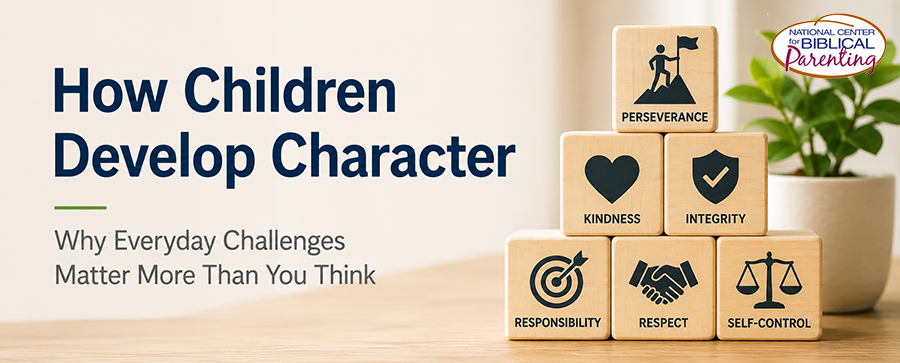

Why Everyday Challenges Matter More Than You Think
Every parent wants their child to develop strong character. We want children who are honest, responsible, resilient, kind, hardworking, and trustworthy. We hope they’ll grow into adults who make good decisions, handle challenges well, and contribute positively to the people around them.
But character doesn’t simply appear as children get older. In fact, age and character are two very different things. A child may grow physically every year, but character develops through a process that requires experience, choices, reflection, and growth. Character isn’t something children are born with fully developed. It’s something they build over time.
Many parents focus primarily on behavior because behavior is visible. They can see whether a child obeys instructions, completes chores, speaks respectfully, or follows family rules. While behavior certainly matters, character is what lies underneath behavior. Character is the internal framework that guides decisions when nobody is watching.
Character Is Built Through Repeated Choices
Character develops one choice at a time. Every day presents opportunities for children to make decisions that either strengthen or weaken important qualities inside them.
A child chooses whether to tell the truth after making a mistake. Another child chooses whether to finish a difficult assignment instead of quitting. A third chooses whether to respond kindly to a sibling who is being annoying. These moments may seem small, but they are where character is formed.
Parents often assume that character develops through major life events. While significant experiences certainly influence children, most character is actually built through ordinary moments. It’s the daily decisions, repeated over months and years, that shape who a child becomes.
Those small choices become habits. Habits become patterns. Patterns eventually become character.
Challenges Create Opportunities for Growth
If life were always easy, character would have very little opportunity to grow. Most character qualities develop only when they are needed.
Patience develops when children have to wait.
Perseverance develops when something is difficult.
Responsibility develops when there are tasks to manage.
Compassion develops when someone else is hurting.
Self-control develops when emotions are strong.
Integrity develops when doing the right thing costs something.
This is why challenges are so important. Challenges create opportunities for growth. Without challenges, children may become comfortable, but they often don’t become stronger.
Parents sometimes view struggles as interruptions to progress. In reality, many struggles are the very environment where progress takes place.
The Difference Between Managing Behavior and Building Character
Behavior management focuses on getting children to do the right thing. Character development focuses on helping children become the kind of people who want to do the right thing.
The difference may seem small, but it changes everything.
For example, a child may clean their room because a parent threatens consequences. The room gets cleaned, but the motivation comes from external pressure.
Another child may clean their room because they value responsibility, ownership, and stewardship. The behavior looks identical, but the motivation is entirely different.
One approach produces compliance. The other develops character.
Character development always asks a deeper question. Instead of merely asking, “Did my child do the right thing?” it asks, “What is happening inside my child’s heart?”
Why Parents Matter So Much
Children don’t naturally understand the lessons hidden inside everyday experiences. That’s where parents play an essential role.
A parent helps a child connect experiences with growth. Instead of simply solving problems, parents can ask questions that encourage reflection.
“What can you learn from this?”
“What would you do differently next time?”
“What kind of person do you want to become?”
“How can this challenge help you grow?”
Questions like these teach children to think about development instead of simply surviving difficulties.
Over time, children begin viewing life differently. They start seeing responsibilities as opportunities. They begin viewing mistakes as learning experiences. They recognize that growth often comes through effort rather than ease.
The Long-Term Goal
Many parenting challenges feel urgent in the moment. Parents naturally focus on getting through today’s conflict, today’s frustration, or today’s responsibility.
But character development requires a longer view.
The goal isn’t simply getting a child to complete a chore today. The goal is helping that child become responsible.
The goal isn’t simply stopping an argument. The goal is teaching self-control, humility, and problem-solving.
The goal isn’t simply getting children through childhood. The goal is preparing them for adulthood.
Every challenge, every responsibility, and every difficult moment becomes part of that larger mission.
Parenting Takeaways
- Character develops through repeated choices over time.
- Everyday challenges create opportunities for growth.
- Most character qualities are formed through ordinary experiences.
- Behavior management and character development are not the same thing.
- Parents help children connect life experiences with personal growth.
- Long-term character is more valuable than short-term compliance.
Frequently Asked Questions
At what age does character development begin?
Character development begins very early. Even young children are learning responsibility, honesty, kindness, patience, and self-control through everyday experiences and interactions.
Can character be taught?
Character is both taught and caught. Parents teach principles, model behaviors, coach through situations, and create opportunities for children to practice important life skills.
Why do some children seem to learn lessons faster than others?
Children develop at different rates based on temperament, experiences, maturity, and learning styles. Growth is rarely a straight line, and progress often comes gradually.
Should parents focus on behavior or character?
Both matter, but character should remain the larger goal. Behavior provides opportunities to discuss and develop the internal qualities that ultimately guide future behavior.
Conclusion
Character isn’t developed in a classroom lesson, a single conversation, or one important event. It’s built gradually through hundreds of choices, experiences, responsibilities, disappointments, successes, and challenges.
That’s why everyday life matters so much. The frustrating moments, the difficult conversations, the responsibilities, and the struggles aren’t distractions from growth. They are often the very tools that produce it.
When parents begin viewing daily life as a training ground for character, they discover that many of the challenges they once dreaded are actually opportunities. Those opportunities, handled wisely, help children become the kind of adults they were created to be.
Want to Go Deeper?
If you’d like practical tools for helping children develop responsibility, perseverance, honesty, compassion, self-control, and other character qualities, explore Raising Internally Motivated Kids. The college-level parenting course equips parents with practical coaching strategies that build internal motivation, while the children’s materials help kids understand that everyday life is preparing them for greater responsibilities ahead. Together, they provide a powerful framework for developing lasting character from the inside out.










Leave a Reply
Want to join the discussion?Feel free to contribute!