
How to Help Children Take Initiative Without Constant Reminders

Many parents feel like they’re carrying the mental load for the entire family. They remind children to brush their teeth, finish homework, feed the dog, clean bedrooms, put away laundry, pack backpacks, and get ready on time. After a while, parenting can start to feel like a full-time job of reminding, prompting, and repeating the same instructions over and over again.
If you’ve ever wondered why your child seems unable to remember responsibilities without constant reminders, you’re not alone. Most children naturally depend on external prompts when they’re young. The problem is that many families unintentionally get stuck there. The parent becomes the child’s external conscience, constantly supplying the motivation and reminders that should eventually come from within.
The good news is that initiative can be taught. Children can learn to notice responsibilities, manage tasks independently, and take ownership of their actions. But helping them develop that skill requires a shift in the way parents think about responsibility training.
The goal isn’t simply getting the task done today. The goal is helping children learn how to manage themselves tomorrow.
When Parents Become the “Middleman”
Many family conflicts begin with a simple pattern.
The parent notices a responsibility.
The parent reminds the child.
The child delays.
The parent reminds again.
The child delays again.
The parent becomes frustrated.
The child becomes annoyed.
The relationship suffers.
The task eventually gets completed, but the process drains energy from everyone involved.
In this pattern, the parent has become the middleman between the responsibility and the child. The child isn’t responding directly to the task itself. Instead, the child is responding to the parent’s voice.
Over time, children can become dependent on that voice.
They stop noticing responsibilities because they’ve learned that Mom or Dad will eventually remind them. In essence, the parent’s reminders become part of the child’s organizational system.
The challenge is that this approach doesn’t build initiative.
It builds dependence.
Children may become quite skilled at responding to reminders without ever learning how to manage responsibilities on their own.
That’s why wise parents gradually work to remove themselves from the middle.
Teaching Children to Notice Environmental Cues
One of the most powerful ways to build initiative is helping children connect responsibilities directly to cues in their environment rather than to a parent’s voice.
Think about how adults manage many responsibilities.
We don’t usually wait for someone to remind us to stop at a red light. The red light itself serves as the cue.
We don’t need someone to tell us to answer the phone when it rings. The ringing becomes the reminder.
Children can learn the same principle.
For example, a clock on the wall can become a cue for bedtime preparation.
A whining dog can become a cue that it’s time for feeding or a walk.
A backpack sitting by the door can become a cue to check for homework.
The family dinner table can become a cue for setting places and preparing to gather.
Instead of saying, “Don’t forget to feed the dog,” a parent might ask, “What tells you it’s time to feed the dog?”
That simple question shifts attention away from the parent and toward the environment.
Over time, children begin developing awareness of the signals around them. They start noticing what needs to be done without waiting for instructions.
That’s where initiative begins.
The Power of the Honor Look
Many children learn to complete tasks. Fewer learn to take ownership.
That’s where what we call the “Honor Look” becomes so valuable.
The Honor Look means looking beyond the minimum requirement and asking, “What else would help here?”
Imagine a child who has been asked to clean the table after dinner. A child focused only on compliance may wipe the table and leave.
A child who has learned the Honor Look may notice crumbs on the floor and sweep them up without being asked.
The difference is significant.
One child completed the assignment.
The other child took ownership.
The Honor Look teaches children to move beyond merely doing what’s required and begin contributing in meaningful ways. It helps them think relationally instead of transactionally.
This skill serves children throughout life because employers, teachers, coaches, and future spouses all appreciate people who notice needs and respond proactively.
Initiative often begins with one simple question:
“What else would help?”
The Privilege of Self-Management
One of the best illustrations of initiative comes from children who learn to manage themselves.
Consider a group of nine-year-olds who were given alarm clocks and taught to wake up independently each morning. Instead of parents repeatedly entering bedrooms and issuing reminders, the responsibility gradually shifted to the children.
Something interesting happened.
The children became proud of managing themselves.
What had once been a source of conflict became a source of ownership.
That’s because initiative feels good.
Children often rise to challenges when they’re trusted with responsibility and given appropriate support. They begin to see self-management as a privilege rather than merely an obligation.
Of course, parents still coach and guide. This isn’t about abandoning children to figure everything out alone. It’s about gradually transferring responsibility in age-appropriate ways.
Every time a child successfully manages a task independently, confidence grows.
And confidence often fuels more initiative.
What This Means for Parents
Most parents don’t enjoy nagging. They do it because they want their children to succeed.
The irony is that too many reminders can actually delay the development of responsibility. Children may become dependent on external prompts instead of learning to manage themselves.
By helping children recognize environmental cues, practice the Honor Look, and take ownership of responsibilities, parents begin transferring the weight of responsibility from their own voice to the child’s heart.
That’s where lasting growth happens.
Children who develop initiative become less dependent on reminders and more capable of managing life independently.
And that’s one of the greatest gifts parents can give.
Parenting Takeaways
- Avoid becoming the middleman between responsibilities and your child.
- Help children identify environmental cues that signal action.
- Use questions rather than constant reminders.
- Teach the Honor Look by encouraging children to notice one extra helpful action.
- View self-management as a skill that develops over time.
- Celebrate initiative whenever you see it.
Frequently Asked Questions
At what age can children begin managing responsibilities independently?
Even young children can begin learning simple routines and responding to environmental cues. Independence grows gradually as children mature.
What if my child ignores the environmental cues?
Children often need coaching and practice. The goal isn’t perfection immediately but gradual growth in awareness and ownership.
Should I stop reminding my child altogether?
Not necessarily. Parents should reduce reminders strategically while increasing coaching and responsibility transfer.
What’s the difference between responsibility and initiative?
Responsibility means completing what’s expected. Initiative means noticing needs and acting without being prompted.
Conclusion
Children aren’t born with initiative. It’s a skill that develops through training, practice, and opportunity. When parents stop serving as the constant middleman and begin helping children respond directly to responsibilities, something powerful happens. Children start noticing, thinking, and acting independently. Over time, the reminders decrease, ownership increases, and responsibility moves from the parent’s voice into the child’s heart.
Want to Go Deeper?
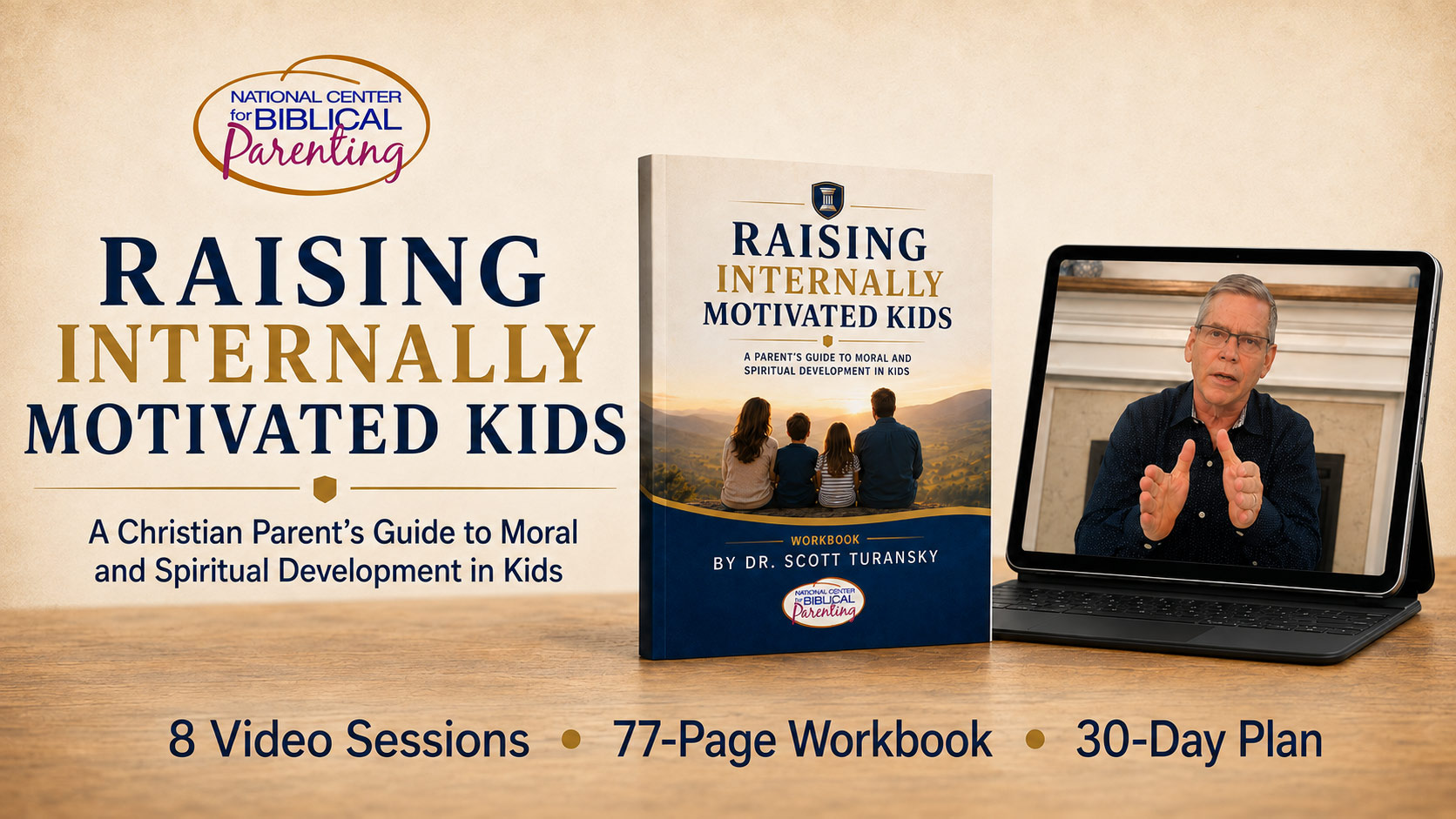
If you’d like practical tools for helping children develop initiative, responsibility, honor, self-control, and strong character, explore Raising Internally Motivated Kids. This unique program helps families move beyond behavior management and focus on heart transformation.
The college-level parenting course equips parents with practical coaching strategies, while the children’s activities help bring character-building principles to life through engaging lessons, object talks, activities, and discussions. Together, they provide a powerful framework for helping children become responsible, motivated, and internally driven. Learn more at app.biblicalparenting.org/motivation
Leave a Reply
Want to join the discussion?Feel free to contribute!