How to Turn Discipline Moments into Life-Changing Conversations

Few aspects of parenting create more frustration than correction. Most parents begin the day with a plan. There are errands to run, meals to prepare, work to complete, and responsibilities to manage. Then suddenly a child argues, disobeys, lies, complains, or treats someone unkindly. What seemed like a productive day is interrupted by a problem that now requires attention.
It’s easy to view those moments as inconveniences. Many parents find themselves thinking, “Why is this happening right now?” or “I don’t have time for this today.” But what if those interruptions are actually some of the most important opportunities of the day?
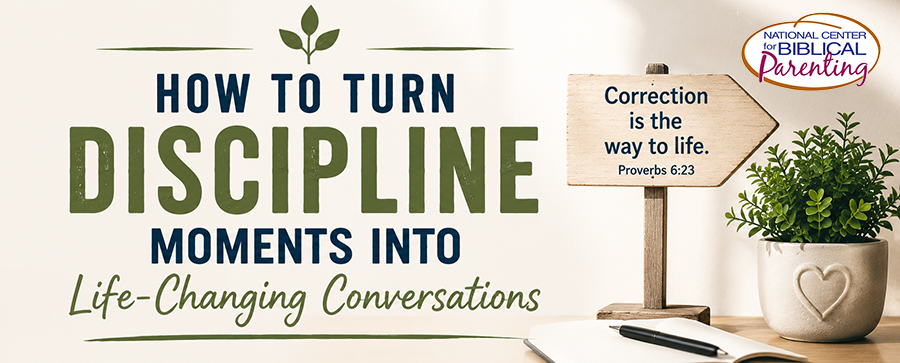
The Bible presents correction from a very different perspective. Proverbs 6:23 says: “For this command is a lamp, this teaching is a light, and correction and instruction are the way to life.”
Notice that correction isn’t described as a problem. It’s described as a pathway. The corrections of discipline are the way to life.
When parents begin seeing correction as a teaching opportunity rather than an interruption, everything changes. Discipline becomes less about stopping bad behavior and more about helping children learn the skills, values, and character qualities they’ll need for the rest of their lives.
This requires margin in life. When schedules become overloaded, every problem feels like an emergency. Every interruption feels like a burden. Every correction moment feels like something standing in the way of getting things done.
When correction becomes a teaching moment instead of a scheduling problem, discipline takes on a completely different tone.
Correction Is One of Life’s Greatest Teachers
Most adults understand the value of correction in other areas of life. Athletes need coaches who point out mistakes and teach better techniques. Musicians need instructors who help them improve. Students need teachers who identify errors and explain concepts more clearly.
In fact, people who excel in life often become skilled at receiving correction. They understand that feedback helps them grow.
Yet many children view correction very differently. To them, correction often feels like punishment, rejection, or failure. They may become defensive, discouraged, or angry whenever mistakes are addressed. That’s why one of the most important things parents can do is help children develop a healthy view of correction.
Instead of presenting correction as something negative, parents can teach that correction is a gift. It’s information that helps us improve. It’s guidance that helps us grow. It’s a tool that points us toward success.
A child who learns to receive correction well gains a tremendous advantage in life because growth always requires learning from mistakes.
Accepting Correction Well Requires Courage
One of the most powerful lessons children can learn is that making mistakes doesn’t make them failures. That’s a very different message for many children. Some children learn to hide mistakes. Some learn to blame others. Some learn to make excuses. Others become so afraid of failure that they avoid challenges altogether.
A strong person is different. They take responsibility, fix what they can, learn from mistakes and move forward.
When children understand this concept, correction becomes less threatening. Instead of fearing mistakes, they begin seeing mistakes as opportunities to grow.
Parents can reinforce this mindset by celebrating honesty, responsibility, and repentance just as much as they celebrate achievement. The goal isn’t perfection. The goal is growth.
What Children Learn During Correction
Many parents focus primarily on the behavior that needs to change. While behavior matters, children are often learning much bigger lessons during correction moments.
They’re learning how to respond when they’re wrong. They’re learning whether mistakes destroy relationships. They’re learning whether honesty is safe. They’re learning whether growth is possible. They’re learning how mature people handle failure. Those lessons often have a greater long-term impact than the original issue itself.
When children handle correction with grace, they begin to develop resilience, humility, responsibility, and courage. They learn that being wrong isn’t the end of the story. It’s simply the beginning of a new opportunity to learn.
What This Means for Parents
The next time correction is needed, try viewing the moment differently. Instead of asking, “How do I stop this behavior?” Ask, “What life skill can my child learn right now?” That simple shift transforms discipline. The goal moves from behavior management to character development.
The interruption becomes an opportunity. The frustration becomes a lesson. The correction becomes a pathway to growth. That’s why Proverbs calls correction the way to life. It helps children develop the character qualities they’ll carry into friendships, school, careers, marriage, and their relationship with God.
Parenting Takeaways
- Correction is a pathway to growth, not merely a response to wrongdoing.
- Children need to learn that correction is a gift, not a rejection.
- Margin helps parents respond with wisdom rather than frustration.
- Heroes admit mistakes and take responsibility.
- Discipline moments often teach bigger lessons than the original offense.
- Focus on character development, not just behavior management.
Frequently Asked Questions
How can I help my child stop fearing correction?
Present correction as coaching rather than condemnation. Emphasize growth, learning, and improvement instead of failure.
What does it mean to create margin in parenting?
Margin means leaving enough emotional and time space in your life to respond thoughtfully when teaching opportunities arise.
Should discipline always involve a conversation?
Not every situation requires a lengthy discussion, but meaningful conversations often help children understand the values behind the correction.
Why is admitting mistakes considered courageous?
Because it requires humility, honesty, and personal responsibility. Those qualities are signs of genuine strength.
Conclusion
Correction doesn’t have to be a frustrating interruption to family life. It can become one of the most powerful teaching tools parents possess. When children learn that correction is the way to life, they begin developing the courage to admit mistakes, the humility to learn, and the wisdom to grow. Those qualities will serve them long after childhood has ended and prepare them for success in every area of life.
Want to Go Deeper?
To learn more about developing internal motivation in children, consider the parent-child interactive program Hero Training Camp at Home. This unique program includes a college-level parenting course with eight sessions focused on helping children develop responsibility, integrity, compassion, and other character qualities from the inside out.
In addition to the parent training, the program includes activities, Bible stories, craft ideas, and conversation starters designed for children ages 3–12. While the children’s activities focus on younger kids, the parenting course is valuable for parents of children of all ages.
If you’re looking for practical ways to build character, strengthen the conscience, and help your child develop internal motivation, Hero Training Camp at Home provides a powerful next step. Learn more at https://app.biblicalparenting.org/heroesathome






Leave a Reply
Want to join the discussion?Feel free to contribute!