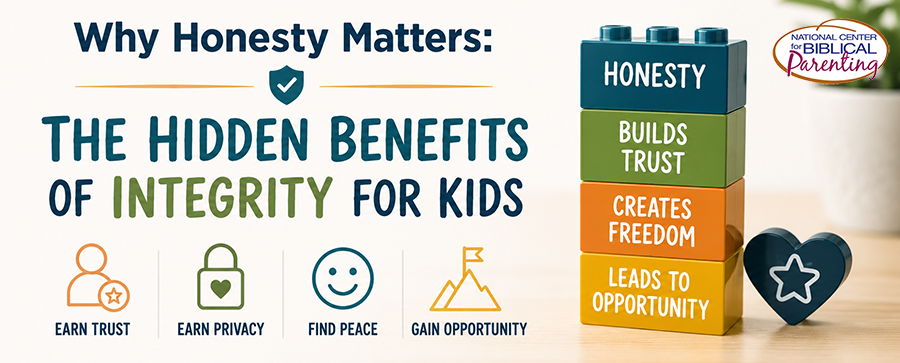
Why Honesty Matters: The Hidden Benefits of Integrity for Kids

Every parent wants their child to be honest. Whether children are five or fifteen, honesty is one of those character qualities that seems universally important. Parents know that trust is foundational in relationships, and they understand that dishonesty can create significant problems. Yet many children view honesty primarily as a rule rather than a valuable life skill.
That’s unfortunate because honesty provides benefits far beyond simply avoiding trouble.
When children understand what integrity actually gives them, they become much more motivated to pursue it. Integrity isn’t merely about following rules. It’s about gaining something valuable. In many ways, honesty comes with what might be called an “Integrity Package”—a collection of benefits that strengthen relationships, increase freedom, and create peace of mind.
The challenge for parents is helping children see these benefits before they learn painful lessons through broken trust and damaged relationships. When children begin understanding what integrity provides, honesty becomes more than an obligation. It becomes a pathway to freedom and success.
Honesty Is the Foundation of Every Relationship
Every meaningful relationship is built on trust. Friendships depend on trust. Families depend on trust. Marriages depend on trust. Businesses depend on trust. Even our relationship with God is built on truth and honesty.
Without trust, relationships become fragile. People begin questioning motives, doubting words, and wondering whether they can rely on one another. That’s why honesty is far more than a moral principle. It’s the foundation that supports every healthy relationship.
Children sometimes assume that dishonesty only affects a single situation. They may think, “It’s just one lie,” or “Nobody will know.” What they often don’t realize is that dishonesty affects something much larger.
The good news is that children who consistently practice honesty begin accumulating something powerful. They build a reputation for reliability that serves them throughout life.
The Benefit of the Doubt
One of the most valuable gifts honest people receive is something called the benefit of the doubt.
Imagine two children. One child has consistently told the truth for years. The other has developed a pattern of dishonesty. Now imagine both children are accused of something they didn’t do. Which child will people naturally believe?
Most likely, the child with a history of honesty. That’s the benefit of the doubt. It isn’t something parents can give on command. It’s something children earn through repeated trustworthy behavior. Over time, honesty creates credibility. People learn that this person’s words can be trusted.
The unfortunate reality is that the benefit of the doubt is much easier to lose than it is to gain. Trust often grows slowly but can disappear quickly. That’s why integrity is so valuable. Every honest choice strengthens a child’s credibility and makes future relationships stronger.
The Privilege of Privacy
Many children believe privacy is a right. In reality, privacy is often a privilege that grows alongside trust.
Consider a young child who has repeatedly made poor choices when unsupervised. Parents naturally increase accountability because they’re trying to protect the child and help them grow. As trust increases, supervision often decreases.
The opposite is also true. When dishonesty increases, accountability usually increases as well. Parents may need to check phones, monitor activities, verify assignments, or follow up more frequently. This isn’t punishment. It’s a practical response to broken trust.
Children who consistently demonstrate honesty often enjoy greater freedom because parents have confidence in their choices. That’s one reason integrity matters so much. Honesty expands freedom. Dishonesty often restricts it.
When children understand this connection, they begin seeing honesty as an investment rather than merely a rule.
The Freedom of a Clear Conscience
One of the greatest benefits of integrity is internal peace. Dishonesty creates pressure.
Children who lie often worry about being caught. They have to remember stories, manage details, and wonder when the truth might emerge. Even when nobody else knows, the conscience knows. That’s a heavy burden.
Honesty creates a very different experience. Children who tell the truth don’t have to manage deception. They don’t have to remember false stories. They don’t have to worry about maintaining appearances.
Instead, they experience the freedom that comes from a clear conscience. That freedom is difficult to appreciate until it’s lost.
Many adults can remember situations where honesty was difficult but ultimately brought peace. Children need to learn this lesson early because it helps them understand that integrity benefits them personally, not just the people around them.
Trustworthiness Leads to More Opportunity
Reliable people are given more responsibility. Teachers trust them. Coaches depend on them. Employers value them. Parents give them greater freedom.
Throughout life, opportunities often flow toward trustworthy people because trust reduces risk. When someone consistently demonstrates integrity, others feel confident placing responsibilities in their hands.
Children who understand this principle begin recognizing that honesty isn’t simply about avoiding negative consequences. It’s about creating positive opportunities.
The more trustworthy a child becomes, the more doors tend to open. That’s true in school. It’s true in friendships. It’s true in future careers. And it’s true in family life.
What This Means for Parents
Children are far more likely to pursue honesty when they understand its benefits. Instead of focusing exclusively on the dangers of lying, parents can help children appreciate what integrity provides. Conversations about trust, freedom, privacy, opportunity, and peace of mind often motivate children more effectively than repeated warnings.
When children see honesty as a valuable asset rather than merely a rule, their perspective begins to change. They stop asking, “What happens if I get caught?” And they start asking, “What kind of person do I want to become?” That’s where character development truly begins.
Parenting Takeaways
- Honesty is the foundation of healthy relationships.
- Integrity creates trust and credibility over time.
- The benefit of the doubt is earned through consistent honesty.
- Privacy often grows as trust grows.
- A clear conscience provides peace and freedom.
- Trustworthy children receive greater responsibility and opportunity.
Frequently Asked Questions
Why do children sometimes lie even when they know honesty is important?
Children often focus on short-term benefits rather than long-term consequences. Helping them see the benefits of integrity can strengthen their motivation to tell the truth.
Is privacy a right for children?
Children need age-appropriate privacy, but increased freedom and privacy are often connected to demonstrated trustworthiness.
How can I help my child value honesty more?
Talk about the benefits of integrity, celebrate truthful choices, and discuss how trust impacts relationships and opportunities.
What is the benefit of the doubt?
It’s the credibility a person earns through consistent honesty. When questions arise, trustworthy people are more likely to be believed.
Conclusion
Honesty is much more than a rule. It’s a foundation for freedom, trust, opportunity, and peace of mind. When children understand the benefits that come with integrity, they begin viewing honesty differently. Instead of seeing it as something that limits them, they discover that it actually opens doors. That’s one reason integrity remains one of the most important character qualities parents can help children develop.
Want to Go Deeper?
To learn more about developing internal motivation in children, consider the parent-child interactive program Hero Training Camp at Home. This unique program includes a college-level parenting course with eight sessions focused on helping children develop responsibility, integrity, compassion, and other character qualities from the inside out.
In addition to the parent training, the program includes activities, Bible stories, craft ideas, and conversation starters designed for children ages 3–12. While the children’s activities focus on younger kids, the parenting course is valuable for parents of children of all ages.
If you’re looking for practical ways to build character, strengthen the conscience, and help your child develop internal motivation, Hero Training Camp at Home provides a powerful next step. Learn more at https://app.biblicalparenting.org/heroesathome

Leave a Reply
Want to join the discussion?Feel free to contribute!