
The One Minute Hero: Teaching Kids Initiative
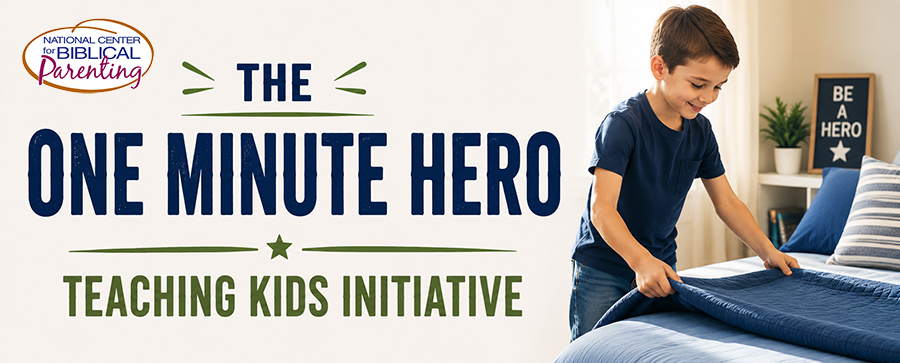

Many parents feel like they spend a large portion of their day reminding children to do things they already know how to do.
Pick up your clothes. Make your bed. Put your dishes away. Finish your homework. Feed the dog.
After a while, it can feel as though parenting consists of little more than repeating the same instructions over and over again.
The problem isn’t usually that children lack ability. Often, they know exactly what needs to be done. The real challenge is that they’re relying on external reminders instead of developing internal motivation.
That’s where initiative comes in. Initiative is the ability to see a need and take action without being told. It’s one of the most valuable character qualities a child can develop because it transfers responsibility from the parent’s voice to the child’s heart.
The encouraging news is that initiative can be taught. In fact, some of the most important lessons about responsibility happen through very small actions that only take a minute or two.
The Power of the One Minute Hero
When most children hear the word “hero,” they imagine someone doing something dramatic. They picture rescuing people from danger, winning a championship, or accomplishing something extraordinary.
Real-life heroism often looks much different. Sometimes it takes only one minute. A child notices a towel on the floor and hangs it up. A child sees a sibling struggling and offers help. A child notices toys left in the living room and picks them up. A child wipes the bathroom sink after using it.
None of these actions are dramatic. Yet each one reflects something important. The child is noticing needs and taking responsibility without external prompting. That’s initiative.
In many ways, hero training isn’t about teaching children to do huge things. It’s about teaching them to consistently do small things that demonstrate responsibility, kindness, and awareness.
Those small actions add up over time and eventually become habits of character.
Doing More Than Expected
One of the simplest ways to explain initiative is this: Heroes do more than expected.
Most children learn how to do exactly what they’re told. If a parent says, “Fold the towels,” the child folds the towels. That’s obedience, and obedience is important. But initiative goes one step further.
After folding the towels, the child notices the sink is messy and wipes it down. Or after putting away toys, the child notices a book on the floor and puts that away too. The child wasn’t told to do those extra things. The child simply noticed a need and responded.
This mindset changes the way children think about responsibility. Instead of asking, “What’s the least I can do?” they begin asking, “What else would be helpful?” That’s an important shift because it prepares children for success in relationships, school, work, and eventually adult life.
People who consistently do more than expected stand out. They become dependable. They become valuable. They become leaders.
Training Through Small Responsibilities
Parents sometimes focus on large goals and overlook small opportunities. Yet character is usually built through everyday routines. Making a bed. Putting away clothes. Returning dishes to the kitchen. Organizing school supplies. Completing chores without reminders.
These tasks may seem insignificant, but they’re actually powerful training opportunities. Each small responsibility teaches children how to manage themselves. The goal isn’t simply getting a clean room or an organized closet. The goal is helping children learn ownership.
When children consistently care for their own belongings and responsibilities, they begin seeing themselves as responsible people. That’s a significant step in character development. Small tasks become practice fields for larger responsibilities later in life.
Moving From Obedience to Ownership
Many parents unknowingly stop at obedience. They give instructions. Children comply. The task gets done. While obedience is valuable, it’s not the ultimate goal. Ownership goes deeper.
Ownership means a child begins valuing the responsibility itself. For example, a child may initially clean their room because they want to avoid consequences. That’s external motivation.
Over time, however, the child may begin appreciating what a clean room provides. They can find things more easily. The room feels peaceful. It reflects responsibility. Now the motivation is internal.
The child isn’t simply cleaning to stay out of trouble. They’re cleaning because they value order. That’s a very different mindset. Parents who want long-term change should focus not only on behavior but also on helping children understand the value behind the behavior.
What This Means for Parents
If you’re tired of constantly reminding your children, don’t lose heart. The goal isn’t perfection. The goal is training. Every time you encourage initiative, recognize extra effort, or help a child notice a need, you’re strengthening an important life skill.
Focus on small wins. Celebrate moments when children take responsibility without being asked. Point out examples of initiative when you see them. Over time, those one-minute hero moments begin shaping a child’s character in powerful ways.
Eventually, responsibility moves from your voice to their heart. That’s where lasting change happens.
Parenting Takeaways
- Initiative is noticing a need and acting without being told.
- Small acts of responsibility often build the strongest character.
- Heroes do more than what’s expected.
- Everyday chores provide valuable opportunities for character training.
- Ownership is more powerful than simple obedience.
- The ultimate goal is developing internal motivation rather than dependence on reminders.
Frequently Asked Questions
How can I encourage initiative without nagging?
Notice and affirm moments when your child takes responsibility independently. Positive recognition often reinforces initiative more effectively than repeated reminders.
What age can children begin learning initiative?
Children can begin learning initiative at very young ages through simple responsibilities such as putting toys away, making beds, or helping with family tasks.
What if my child only responds to reminders?
That’s normal during development. Continue coaching, modeling, and creating opportunities for ownership. Initiative grows over time.
Why are small tasks so important?
Small tasks provide daily opportunities to practice responsibility, ownership, and self-management. These skills eventually transfer to larger areas of life.
Conclusion
Training doesn’t usually happen through dramatic moments. More often, it happens through small acts of responsibility repeated day after day. When children learn to notice needs, take initiative, and do more than what’s expected, they develop character qualities that will serve them throughout life. Those one-minute hero moments may seem small today, but they’re building habits that can last a lifetime.
Want to Go Deeper?
To learn more about developing internal motivation in children, consider the parent-child interactive program Hero Training Camp at Home. This unique program includes a college-level parenting course with eight sessions focused on helping children develop responsibility, integrity, compassion, and other character qualities from the inside out.
In addition to the parent training, the program includes activities, Bible stories, craft ideas, and conversation starters designed for children ages 3–12. While the children’s activities focus on younger kids, the parenting course is valuable for parents of children of all ages. If you’re looking for practical ways to build character, strengthen the conscience, and help your child develop internal motivation, Hero Training Camp at Home provides a powerful next step. Learn more at https://app.biblicalparenting.org/heroesathome







Leave a Reply
Want to join the discussion?Feel free to contribute!