
Why Children Lie: Understanding the Real Reasons Behind Dishonesty

Few things concern parents more than discovering that a child has lied. Whether it’s a small exaggeration, a hidden mistake, a false excuse, or a deliberate deception, dishonesty can quickly damage trust and create tension within a family. Many parents respond by focusing on the lie itself, asking questions like, “Why would you do that?” or “Didn’t you know that was wrong?”
Those questions are understandable, but they often miss something important.
Lying rarely happens in a vacuum.
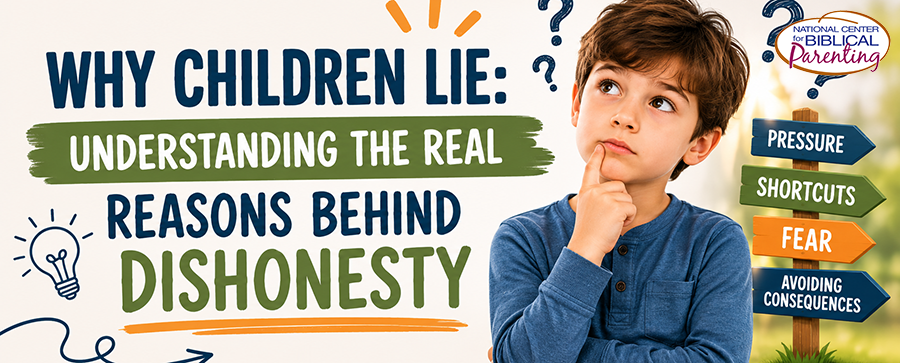
Children usually don’t wake up in the morning planning to deceive people. Instead, dishonesty often emerges when children feel pressure. Understanding that pressure is one of the keys to helping children develop honesty. When parents learn to look beneath the behavior, they can address the heart issues that make lying seem attractive in the first place.
The goal isn’t simply catching children in dishonesty. The goal is helping them become people who value truth even when telling the truth feels difficult.
Dishonesty Always Happens Under Pressure
Think about the last time you were tempted to bend the truth.
Perhaps you wanted to avoid embarrassment.
Maybe you wanted someone to think well of you.
Perhaps you wanted to avoid consequences.
Children experience these same pressures every day.
A child breaks something and fears punishment.
A student forgets an assignment and wants to avoid disappointment.
A teenager wants friends to accept them and feels pressure to fit in.
In each case, dishonesty becomes tempting because it appears to provide relief from pressure.
The lie promises protection.
The truth feels risky.
This is why simply telling children that lying is wrong isn’t always enough. Parents must help children understand what happens internally when pressure builds. They need to learn how to recognize those moments and respond with courage instead of deception.
One helpful question to ask is:
“What were you feeling right before you decided to lie?”
That question often reveals the pressure point.
When children learn to identify pressure, they’re better equipped to resist it.
The Shortcut Mentality
One of the most common reasons children lie is because dishonesty looks like a shortcut.
Shortcuts are appealing because they seem easier.
Instead of doing the hard work of telling the truth, a child chooses deception.
Instead of earning trust, a child tries to create it artificially.
Instead of accepting responsibility, a child looks for an escape route.
The problem is that shortcuts rarely take us where we want to go.
Imagine a child who claims homework is finished when it isn’t. The lie may provide temporary relief, but eventually the assignment still needs to be completed. Now the child faces both the unfinished work and the consequences of dishonesty.
The shortcut actually created a longer and more difficult path.
Life works that way.
Truth often requires courage in the moment, but it usually creates freedom later.
Dishonesty may provide temporary comfort, but it almost always creates greater problems down the road.
Helping children understand this principle is important because it shifts the conversation away from punishment and toward wisdom.
Honesty isn’t merely the right choice.
It’s usually the smartest choice.
The Surprising Link Between Honesty and Hard Work
Many parents don’t realize that honesty and diligence are often connected.
Children who struggle with laziness sometimes struggle with honesty as well.
Why?
Because both issues involve how a child responds to difficulty.
When a task feels hard, a child may be tempted to avoid it.
When telling the truth feels hard, a child may be tempted to avoid it.
In both situations, the underlying challenge is similar.
The child is looking for an easier path.
This is one reason chores can be such valuable character-building tools. Chores teach children how to do difficult things even when they don’t feel like doing them. They develop perseverance, responsibility, and follow-through.
Those same qualities strengthen honesty.
A child who learns to push through discomfort while working often becomes better equipped to push through discomfort while telling the truth.
Character qualities tend to support one another.
Hard work strengthens integrity.
Responsibility strengthens honesty.
Self-control strengthens trustworthiness.
That’s why parents should think beyond the specific behavior and focus on the larger character qualities being developed.
Defining What a Lie Really Is
Not every inaccurate statement is a lie.
Young children often engage in fantasy play. They may pretend to be superheroes, invent imaginative stories, or exaggerate details for fun. In many cases, they aren’t attempting to deceive anyone.
Teasing and joking can also involve statements that aren’t literally true.
The key issue is intent.
A lie occurs when a person uses words, actions, or symbols with the intention of deceiving someone else.
That’s an important distinction because parents don’t want to overreact to childhood imagination. At the same time, they want children to understand the seriousness of deliberate deception.
Helping children recognize intent develops greater awareness of their choices. Instead of debating facts alone, parents can ask:
“Were you trying to help someone understand the truth, or were you trying to make them believe something that wasn’t true?”
That question often helps clarify the issue.
Creating a Home Where Truth Is Safe
One reason children sometimes lie is because they believe the truth is too costly.
They fear punishment.
They fear disappointment.
They fear losing approval.
While consequences are important, parents also need to create an environment where honesty is valued and encouraged.
That doesn’t mean eliminating accountability.
It means celebrating truth-telling whenever it occurs, especially when it’s difficult.
When children voluntarily admit mistakes, parents should recognize the courage it took to be honest. The mistake may still need to be addressed, but honesty should be acknowledged as a positive step.
Children need to learn that telling the truth may be difficult, but it is always the first step toward freedom.
What This Means for Parents
Most lies begin with pressure and grow through a shortcut mentality.
Children feel trapped, uncomfortable, embarrassed, or afraid. In that moment, deception appears easier than honesty. The challenge for parents is helping children develop the internal strength to choose truth even when pressure is high.
That strength isn’t developed through lectures alone.
It’s developed through conversations, coaching, accountability, and character training.
As children learn to recognize pressure, reject shortcuts, embrace responsibility, and value integrity, honesty becomes more than a rule.
It becomes part of who they are.
Parenting Takeaways
- Dishonesty usually occurs when children feel pressure.
- Lying often appears to be a shortcut around discomfort.
- Honesty and hard work are closely connected.
- A lie involves the intent to deceive.
- Parents should address heart issues, not just behavior.
- Truth-telling should be encouraged and celebrated.
Frequently Asked Questions
Why do good kids sometimes lie?
Even good kids experience fear, embarrassment, and pressure. Lying is often an attempt to escape discomfort rather than a reflection of overall character.
Should children be punished for every lie?
Consequences may be appropriate, but parents should also address the underlying pressure that contributed to the dishonesty.
How can I encourage honesty?
Create an environment where truth is valued, recognize courageous honesty, and focus on character development rather than simply catching mistakes.
Is exaggeration always lying?
Not necessarily. The key question is whether the child intended to deceive someone.
Conclusion
Children don’t become honest simply because they’re told to tell the truth. They become honest when they develop the courage to face pressure, the strength to reject shortcuts, and the wisdom to value integrity. As parents help children understand why dishonesty happens, they can address the heart issues beneath the behavior and build a foundation for lifelong trustworthiness.
Want to Go Deeper?
If you’d like practical tools for helping children develop honesty, integrity, responsibility, self-control, and a strong conscience, explore Hero Training Camp at Home. This unique parent-child program helps families move beyond behavior management and focus on heart transformation.
The college-level parenting course equips parents with practical coaching strategies, while the children’s activities bring biblical character principles to life through engaging lessons, object talks, activities, and discussions. Together, they provide a powerful framework for helping children develop the courage and character to choose truth even under pressure.






Leave a Reply
Want to join the discussion?Feel free to contribute!